
CLIENT STORYWhy April Felt Like She Could Finally Say Yes to Harvard
April Holman is doing something she has never done in her career: investing three weeks in her own leadership development, uninterrupted.
Three weeks at the Harvard Kennedy School, in the Senior Leaders in State and Local Government program, followed by a week of vacation. When I sat down with her, she told me the most she'd ever been away before was a single week. And then she said something I haven't stopped thinking about, "I'm not sure that I would do this if I didn't know that things were going to be taken care of."
I want to tell you how she got there, because I think a lot of nonprofit leaders will see themselves in this story.
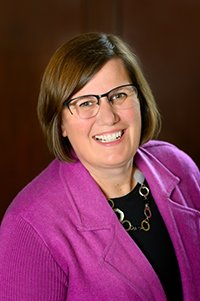

April Holman
Executive directorHer story starts with a milestone, not a problem.
April has led the Alliance for a Healthy Kansas since 2018, guiding its policy direction, coalition building, and grant writing. That's the work that moves the mission, and the work she's genuinely exceptional at.
In September 2025, the Alliance completed its transition into a standalone nonprofit. That's a big deal, the kind of milestone most organizations work years toward. But this milestone brought something else with it: All the work their parent organization used to handle behind the scenes, the finance, benefits, billing, and operational underpinnings, became April’s responsibility overnight.
For April, none of it was work she'd done before, and little of it played to her strengths. That meant every task carried a double cost. First she had to figure out how the thing was supposed to be done, and then she had to actually do it, slowly, because it was unfamiliar. She told me about building a coded expense spreadsheet for the accountants, learning the process as she went. By her own estimate, this type of work was taking four to six hours out of every week.
April saw all of this clearly, and fast. She knew the math didn't work. Every hour she spent learning back-end operations was an hour taken from the grant writing and policy work that she’s exceptional at. In her words, it was unsustainable.
What April did next is so wise.
She didn't resolve to get better at this work, and she didn't hire a full-time employee she'd have to train. She was honest with herself that she had neither the budget nor the bandwidth to teach someone work she was still learning. What she wanted was someone who already knew how to do this part of the job. Someone who could be excellent and lighten her load from day one.
Then another nonprofit leader, one of our clients, told her about Timely. This is typically how it happens, one leader telling another that this support changed things for me.
Nicole came on as April's dedicated EA in November 2025.
Within Nicole's first month, that expense process the accountants were waiting on was running smoothly, with no training period and no ramp-up, because Nicole had done this work before. The recurring bills weren’t buried in the inbox. She built systems, took over board meeting prep, and started drafting the first version of the minutes, the kind of task that gets put off until the last minute in most organizations because everyone’s workload is full.
I love this example, because it shows what proactive support from a Timely EA looks like. The Alliance had a grant report due, and the funder wanted photos of grant-funded activities compiled and presented well. The previous year, April had spent close to six hours on a similar report, six hours of frustration on something outside her skill set, and she hadn't wanted to add it to her communications director's already-full plate. This time, Nicole heard about it in their weekly meeting and simply said, I can do that for you. It was done quickly, and it looked great. "I don't suppose it took her six hours," April told me, "because she had the expertise to start with."
It's a question Nicole asks in nearly every weekly meeting, by the way. Can I take that on for you? Is this something I can do? That's Nicole taking work off April's plate before April has to ask. Over time, more and more has moved off her plate, and it has stayed off.
By April's own estimate, that'sroughly six hours a week back. Hours that used to go to unfamiliar back-end work now go where they belong: grant writing, policy direction, and leading the mission the Alliance exists to serve. As I told April in our conversation, it's about keeping her in her zone of genius.
And some of those hours go back to her life.
Which brings us back to Boston. April is away for nearly a month knowing her inbox is tended to and the weekly team meeting cadence keeps running. And, in the part that matters most to her, Nicole is also supporting her colleague Lacey, who's holding things down while she's gone. That's the freedom the right support makes possible. Not just protected work hours, but the ability to be fully present somewhere else, growing as a leader, without the organization falling apart in your absence.
In her own words:"It's really changed my day-to-day work and our effectiveness as an organization.
A lot of the things that maybe are not the flashy parts of our work, but they have to get done, and they have to get done well, in order for us to continue receiving grants and be in good standing.
I'm so glad that I don't have to add another twenty hours to my workweek."
When I talk to nonprofit leaders, I often hear how dedicated EA support feels like a luxury they can’t justify because their budgets are tight, teams are expected to be lean, and their donors scrutinize every penny of overhead.
April never saw it that way, and I love how she framed it. She was able to hire a staff person, without the full salary, the HR lift, or the months of training, because her EA arrived already knowing how to do the work. In many cases, it's genuinely a cost savings, because the alternative is the Executive Director doing that work herself at the expense of the work that funds the mission.
The nonprofit leaders we support are brilliant, big-hearted people carrying enormous loads. The problem is almost never that they aren't working hard enough. It's that there's no structure protecting the right hours, so the unglamorous, essential back-end work quietly crowds out the work only they can do. April's story is what it looks like when that structure is finally in place. The mission gets her full attention instead of her leftover capacity. And she gets to walk onto a campus in Boston knowing everything at home is handled.
That, to me, is the whole point. Not balance, freedom.
If your week looks like April's used to — new categories of work you're teaching yourself, hours disappearing into tasks outside your strengths, time away you can't quite bring yourself to take — this is exactly what we do, and it would be an honor to talk about what it could look like for your organization.